BLUE
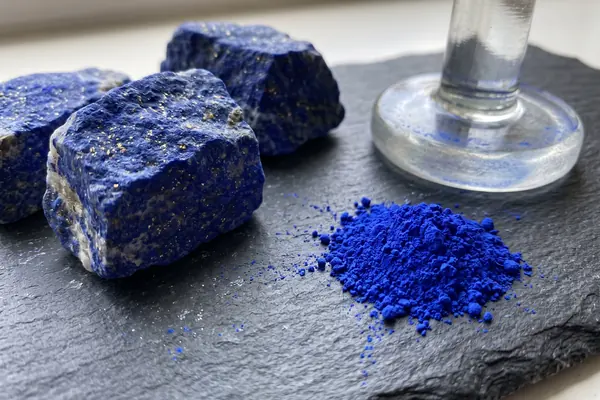
A stone from Afghanistan
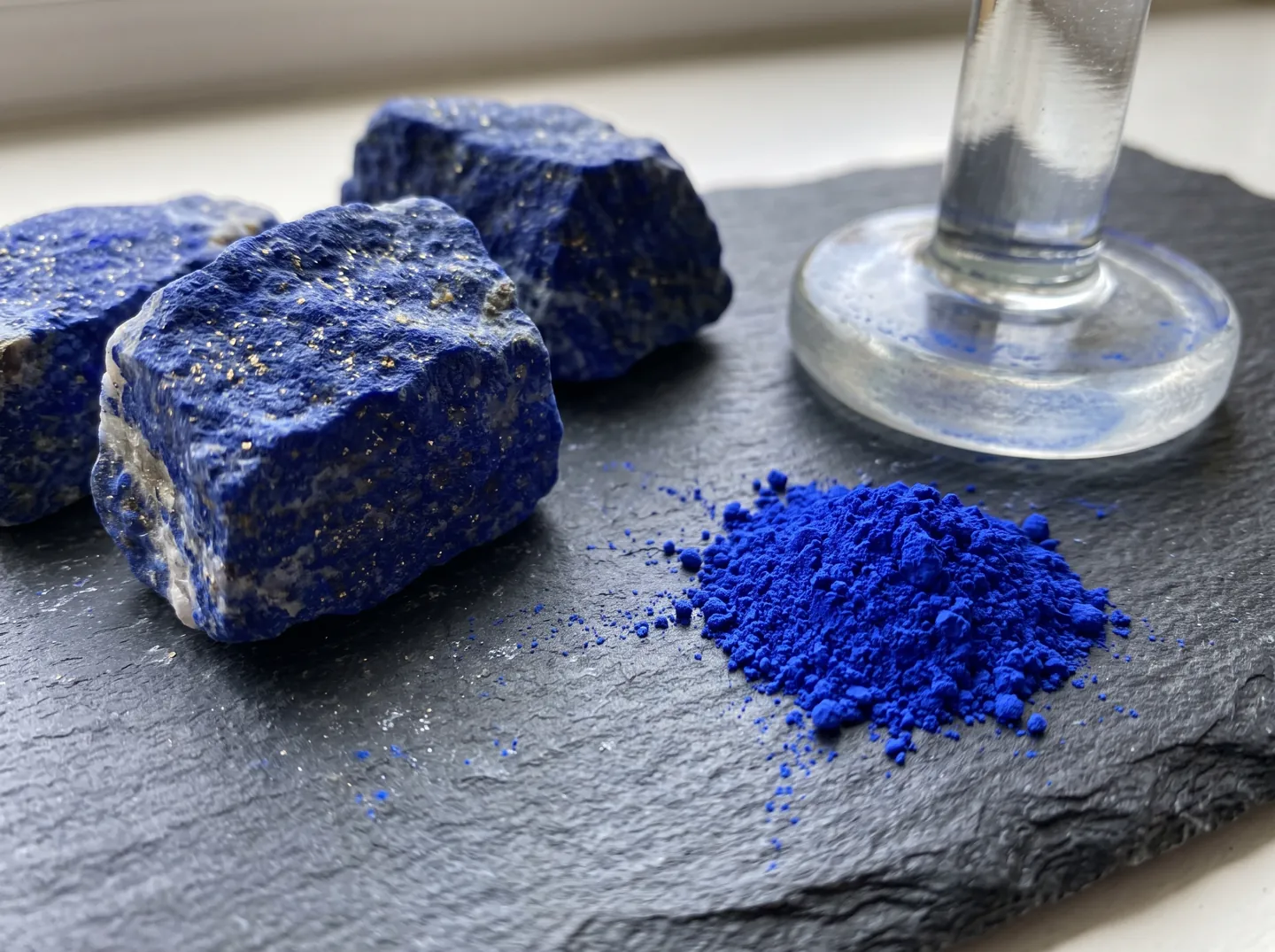
The National Gallery calls ultramarine the purest and richest but most expensive blue, made from lapis lazuli mined in remote Badakshan in Afghanistan. An artificial form arrived in the 19th century.
Compare colours
 doodlecp
THE STORY OF THE COLOUR PALETTE
MAKE the colour
For centuries, every colour on a painter's palette had to be found, dug up, ground or grown.
This independent guide follows the National Gallery's account of how painters got their colours, from a blue stone mined in a remote valley to reds made from plant roots and insects, and the accidental chemistry experiment that gave the world its first synthetic dye.
Updated
Pick a colourTHE SHORT ANSWER
For centuries painters relied on what the earth and living things could give them.
The 19th century added new colours made by chemists.
BLUE
The National Gallery calls ultramarine the purest and richest but most expensive blue, made from lapis lazuli mined in remote Badakshan in Afghanistan. An artificial form arrived in the 19th century.
Compare coloursTHE PALETTE
Reds alone came from minerals, synthetic substances, plants and insects, from madder root used since ancient Egypt to costly insect reds.
The hard coloursPURPLE
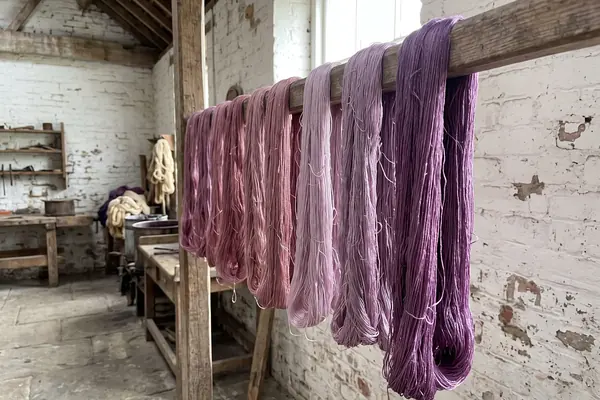
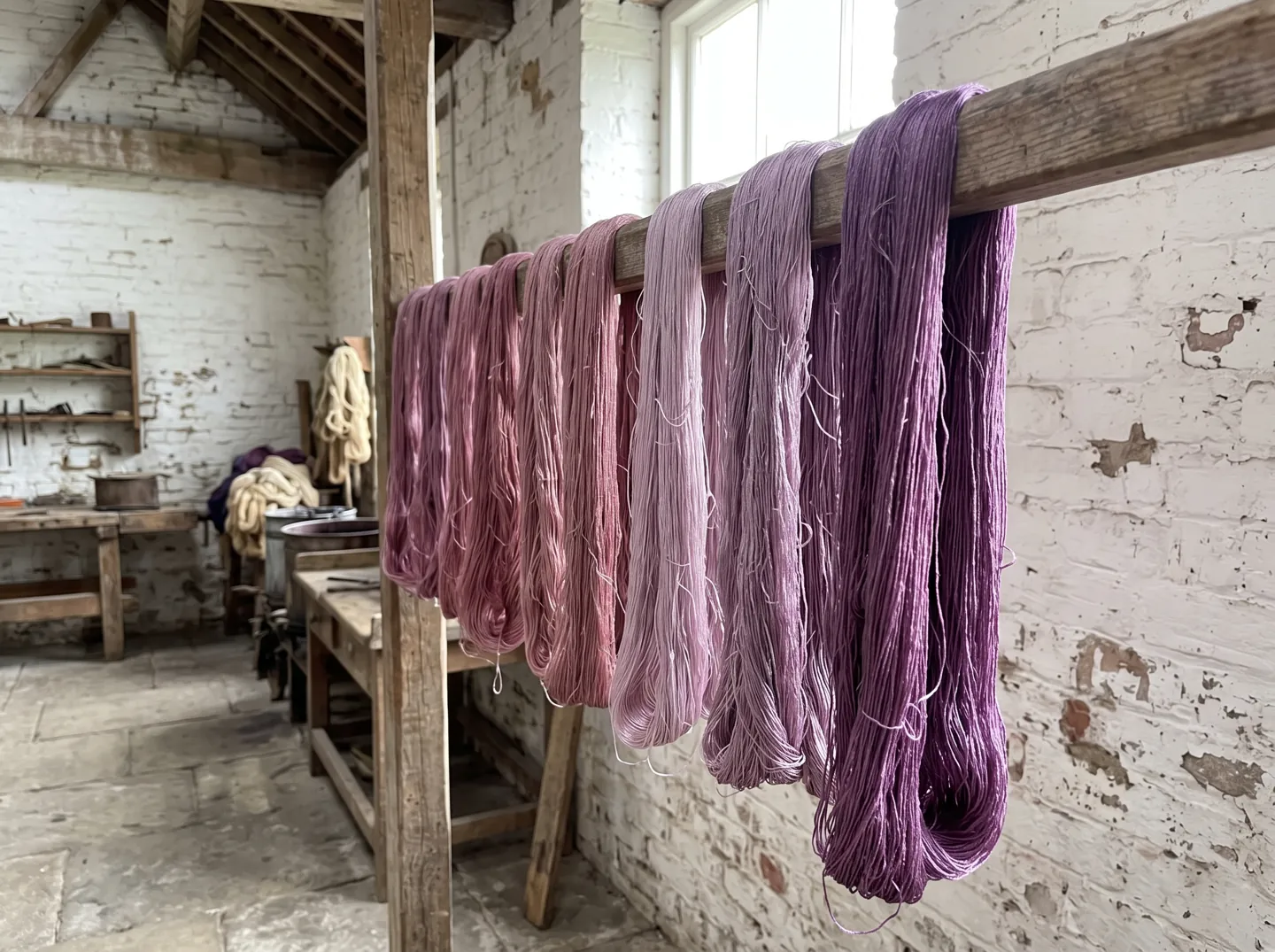
Trying to make quinine, an 18-year-old chemistry student oxidised a coal-tar chemical and got a purple that dyed silk. Mauveine was the world's first synthetic dye.
See the numbersA QUICK COLOUR CHECK
Pick a colour from an old master's palette to see what it was made from. The bar shows how hard or costly the National Gallery says that colour was to obtain.
Summarised from the National Gallery's Making Colour exhibition (2014). Painters also mixed many colours from two others.
TWO NUMBERS WORTH KNOWING
One date that started an industry,
one age that shows how young its inventor was.
1856
First synthetic dye patented
William Henry Perkin patented mauveine, or aniline purple, on 26 August 1856. The Science and Industry Museum in Manchester holds his archive, including a notebook with purple fingerprints on its pages.
MAUVEINE · SCIENCE AND INDUSTRY MUSEUM
18 years old
Perkin's age at the discovery
He made it during the Easter holidays from the Royal College of Chemistry, opened a factory at Greenford Green near London in 1857, and sold the business at 36 to concentrate on research.
THE INVENTOR · SCIENCE HISTORY INSTITUTE
Before mauveine, the National Gallery notes, purple was usually mixed from red and blue; its only mineral source, fluorite, was rarely used by artists.
FOUR WAYS TO LOOK AT A PAINTING
Next time you stand in front of an old painting, these questions help you see the materials as well as the picture.
Ultramarine was the costliest blue. The National Gallery set a portrait with a striking blue robe beside ancient lapis lazuli objects to show it.
Before stable green pigments in the 19th century, many greens were mixtures of blue and yellow, or earth greens mixed with egg or oil.
The National Gallery shows how painters took strong colours from the sister arts of ceramics and glass, sharing workshop know-how.
Gold and silver were not part of the spectrum but were precious colours, used for a glittering effect in works for palaces and churches.
THE HARD COLOURS
The National Gallery says it was common for artists to struggle to find natural materials to make colour. Green was a particular challenge, despite being all around them, and pure orange was rare, with one source, realgar, containing arsenic.
Chemistry changed the palette in the 19th century: an artificial ultramarine, stable greens and, in 1856, Perkin's mauve. The Science and Industry Museum notes that his discovery helped establish the modern chemical industry and turned coal tar from a waste product into a raw material.
Questions
From lapis lazuli, a blue stone mined in remote Badakshan in Afghanistan. The National Gallery describes it as the purest and richest but most expensive blue. An artificial version, French Ultramarine, was discovered in the 19th century.
The National Gallery says green was a particular challenge until stable green pigments were invented in the 19th century, so artists often mixed blues and yellows, or used green earth or verdigris.
Yes. The National Gallery notes that realgar, a mineral that gives a pure orange, contains the poisonous chemical arsenic.
Mauveine, or aniline purple, discovered by 18-year-old William Henry Perkin in 1856 while he was trying to make quinine, and patented on 26 August 1856.
Usually by mixing red and blue pigments. The National Gallery says purple's only mineral source, fluorite, was rarely used by artists.
Sources
ABOUT THIS NAME
doodlecp.com is part of the DoodleSale portfolio. It isn't in an auction right now, but you can ask about leasing it.